Honeywell
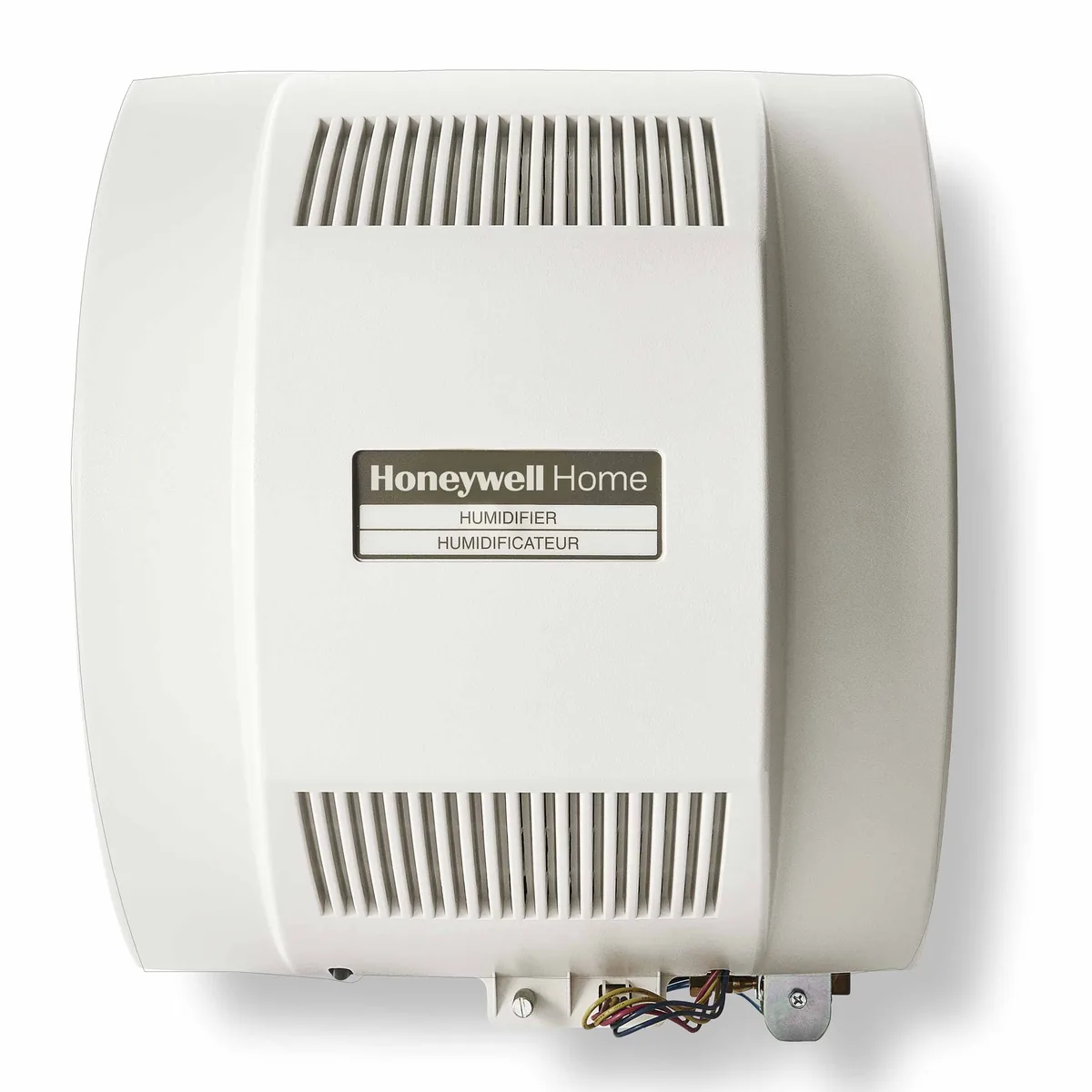
Honeywell HE360 Fan-Powered
Eighteen gallons a day against a published 4,500 sq ft - almost exactly what the load calculation says 18 gal/day supports, which makes this the most precisely honest coverage claim of any whole-house unit here. Like the Aprilaire 700 it carries its own blower, so it humidifies on mild days when a bypass unit sits idle, and Honeywell specifically recommends it with variable-speed and multi-stage furnaces where the burner cycles less. It undercuts the Aprilaire 700 by $60 on hardware.
The room-size claim, reconciled
4,434 sq ft supported · box says 4,500 sq ft
The 4,500 sq ft on the box is what the winter load calculation supports for this output — one of 18 units here whose claim lands within 5% of its own published rate.
What a year costs
one HC26E water pad a season at roughly $25. Electricity assumes the rated 130 W for 12 hours a day across a 150-day heating season at 16¢ per kilowatt-hour.
Specifications
Maintenance profile
- Top fill
- No — tank comes off and goes to the sink
- Replaceable media
- Filter, replaced through the season
Facts, not a score. Which of these matter depends entirely on whether the unit ends up somewhere you will actually clean it.
Features
- 18 gal/day against a 4,500 sq ft claim - within 2% of the load calculation
- Built-in fan, independent of furnace cycling
- Recommended for variable-speed and multi-stage systems
- One HC26E water pad a season
- Automatic humidistat
Pros
- Its stated coverage and its output agree to within a couple of percent - the most accurate whole-house claim here
- Runs when the furnace does not, which is the whole reason to pay more than a bypass unit
- $60 cheaper than the equivalent Aprilaire 700 at the same capacity
- Specifically engineered for the modern furnaces that cycle least
Cons
- 130W of its own blower, where a bypass unit costs about 20W of the furnace's
- The onboard blower is audible near the furnace
- Same install cost and same forced-air requirement as every unit in this class
- Honeywell pads are a different part family from Aprilaire's, so a contractor may stock only one
What owners say
Summarised from owner discussions and long-form owner reviews. Nobody here has used this unit.
On paper this is the most honest whole-house unit here: eighteen gallons a day against a published 4,500 sq ft, which is within a couple of percent of what the load calculation says that output supports. Honeywell recommends it specifically for variable-speed and multi-stage furnaces, where the burner runs too rarely for a bypass unit to keep up.
The owner experience worth passing on is about maintenance. The solenoid valve is a wear item, and when it fails it fails open — water runs continuously. Owners troubleshooting that discover the unit depends on a small group of parts working together: the solenoid, a current relay and a sail switch that confirms airflow. All are individually replaceable and a confident homeowner can do the work, but it is more of a system than a portable humidifier and worth understanding before the first failure rather than during it.
What owners like
- Its published coverage and its published output agree to within a couple of percent, which is the most accurate whole-house claim in this catalog
- Runs when the furnace does not, which is the specific failing owners of bypass units report
- Parts are individually available and the unit is serviceable by a competent homeowner — solenoids, relays and sail switches are all replaceable items
- Undercuts the equivalent Aprilaire on hardware price at the same capacity
Common complaints
- A failed solenoid is a common wear item and its failure mode is water running constantly, which is the kind of fault you want to find early
- Servicing it properly means understanding the sail switch and current relay as well as the valve, which is more than most homeowners expect
- It draws real power whenever it runs, and the fan is audible near the furnace
- Honeywell pads are a different part family from Aprilaire's, so a contractor may stock only one
Questions owners ask
Water is running constantly — what failed?
Is it better than a bypass unit?
Does it really cover 4,500 square feet?
Honeywell HE360 Fan-Powered, head to head
Looked at alongside it
More from Honeywell →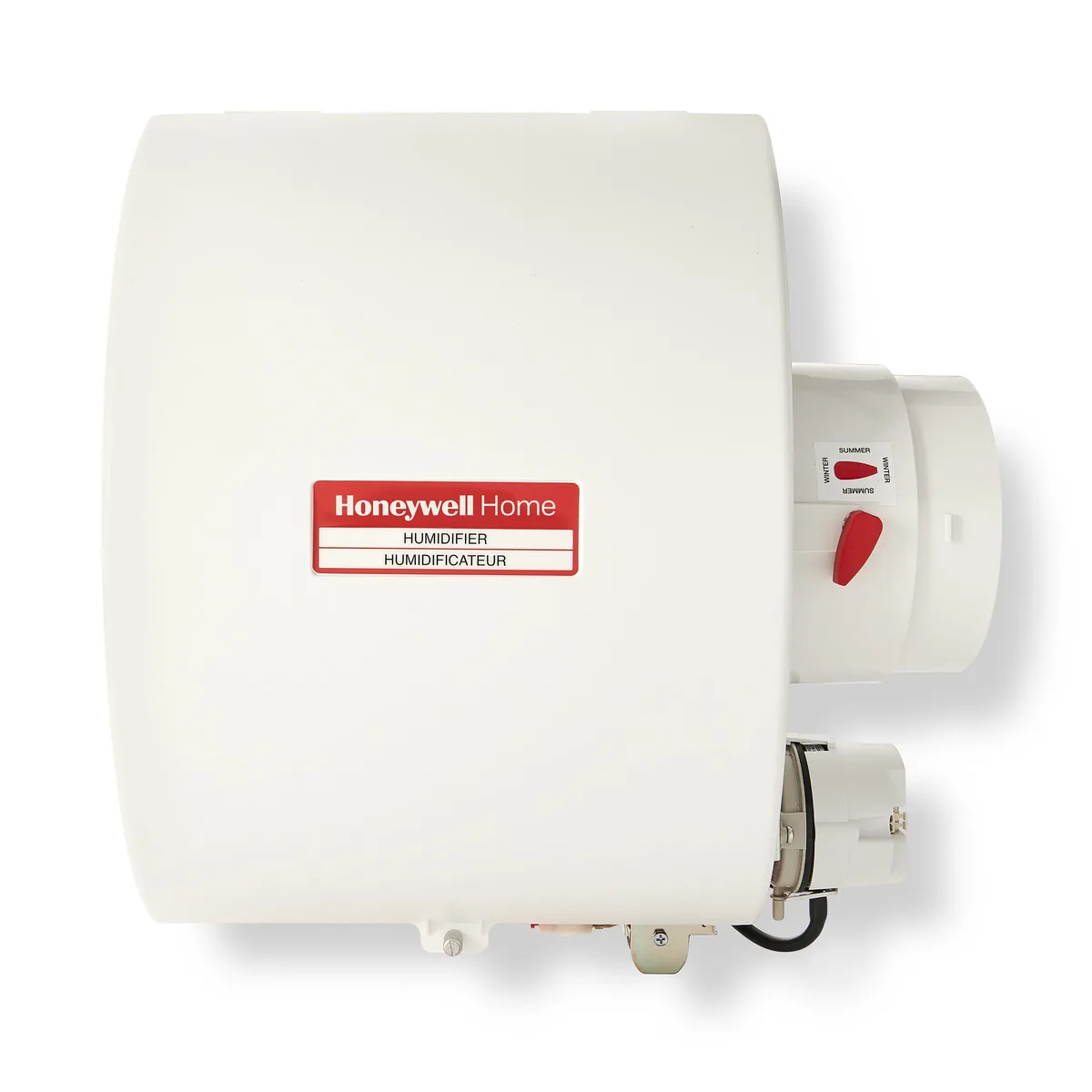
Honeywell
Honeywell HE280 Bypass
Honeywell's direct answer to the Aprilaire 600, matching it at seventeen gallons a day, and the only unit in this catalog that states its coverage in cubic feet rather than square feet - 18,000 of them, which at an eight-foot ceiling is 2,250 sq ft. That is a notably conservative way to quote a machine whose output supports around 4,200, and it is the correct unit to use, since humidity fills a volume rather than a floor. The PerfectFLO tray meters water onto the pad instead of flooding it, which is where the water-saving claim comes from.
4,188 sq ft supported · box says 2,250 sq ft
Aprilaire
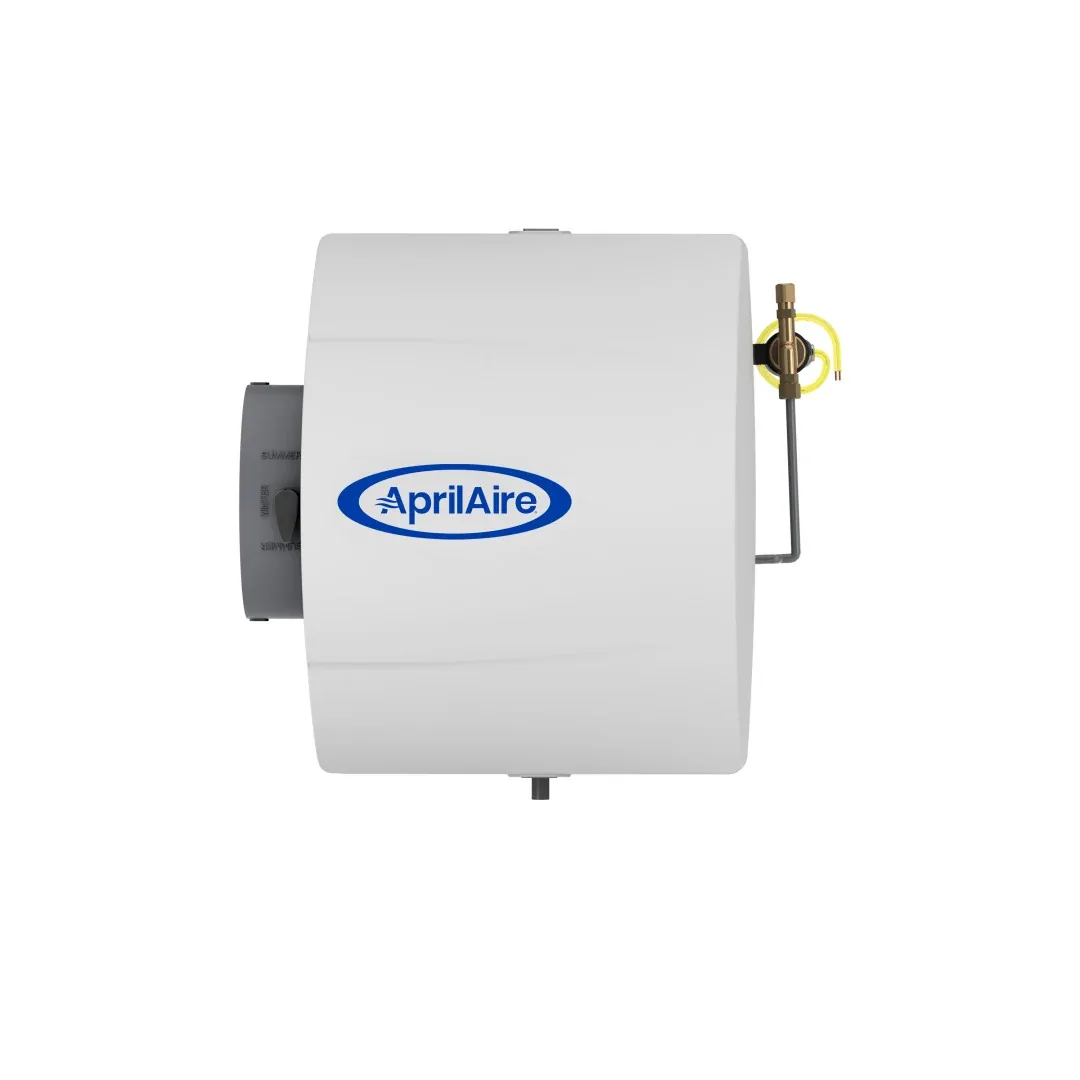
Aprilaire 600 Bypass
The best-selling whole-house humidifier in North America, and the default recommendation from most HVAC contractors for a reason: seventeen gallons a day for $220 of hardware and $25 a year of water panels. The published 5,000 sq ft is the tight-construction figure, and Aprilaire says plainly that an average home of about 2,000 to 2,500 sq ft is the realistic target - a maker volunteering that its headline number applies to a minority of houses. The load calculation puts 17 gal/day at around 4,200 sq ft, neatly between Aprilaire's own two figures.
4,188 sq ft supported · box says 5,000 sq ft
Aprilaire
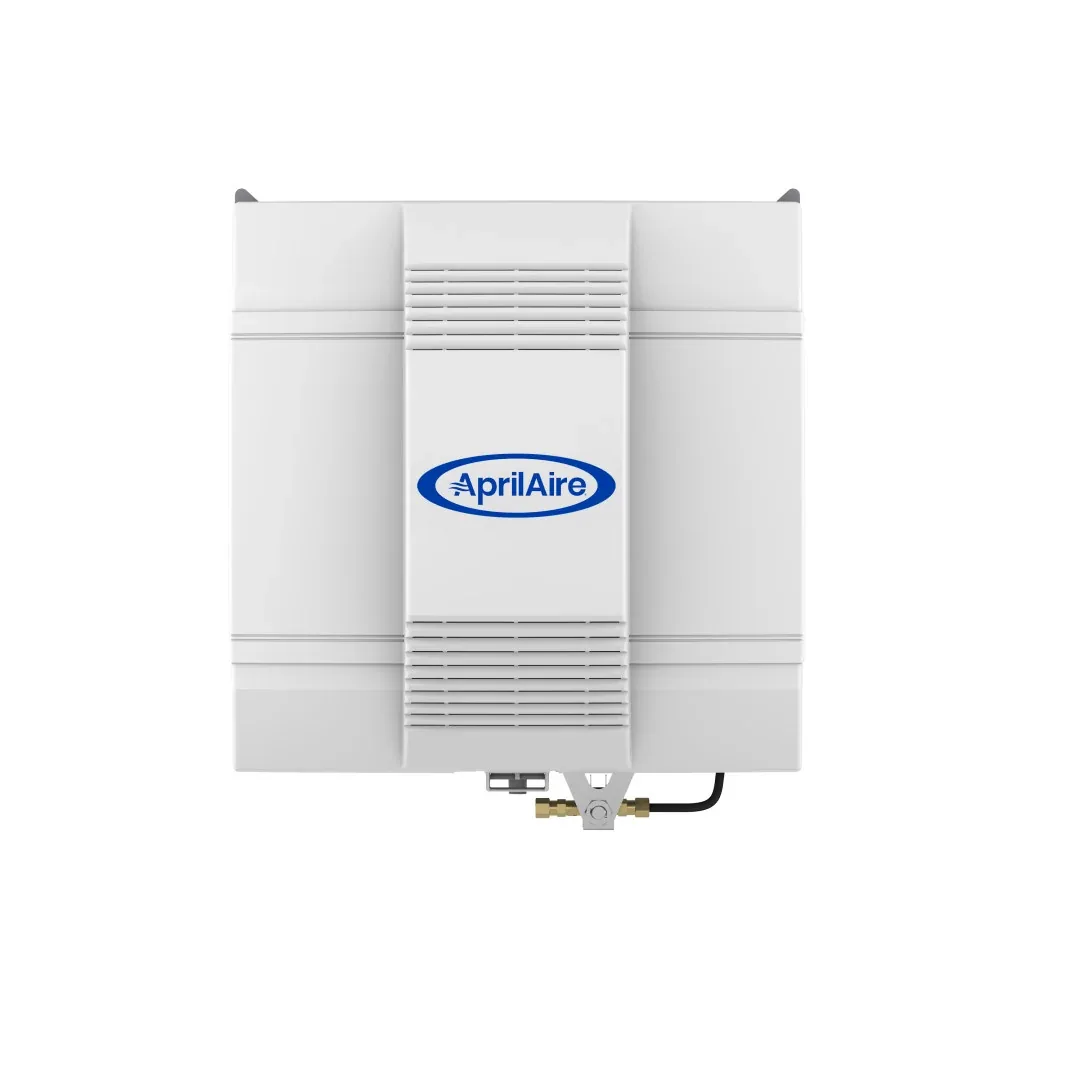
Aprilaire 700 Fan-Powered
The fix for the bypass units' one real flaw. A fan-powered humidifier has its own blower, so it can run independently of the furnace - on a mild day when the heat barely cycles, this one still humidifies and a 500 or 600 does not. It also needs no bypass duct, which makes it the easier install where the furnace is tight against a wall. Eighteen gallons a day, 5,300 sq ft claimed for a tight home, and around 3,000 for an average one by Aprilaire's own guidance. The load calculation lands at about 4,400.
4,434 sq ft supported · box says 5,300 sq ft