Honeywell HEV620 Top Fill Tower vs Honeywell HE360 Fan-Powered
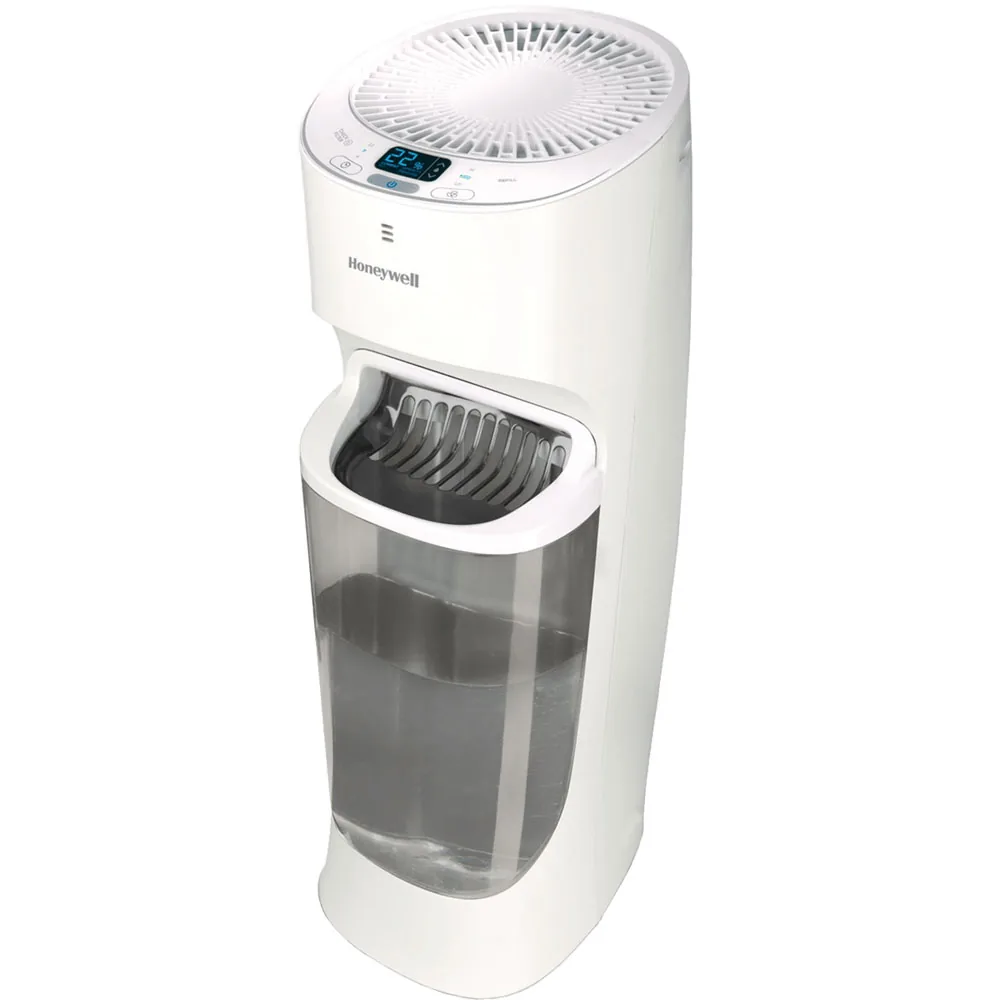
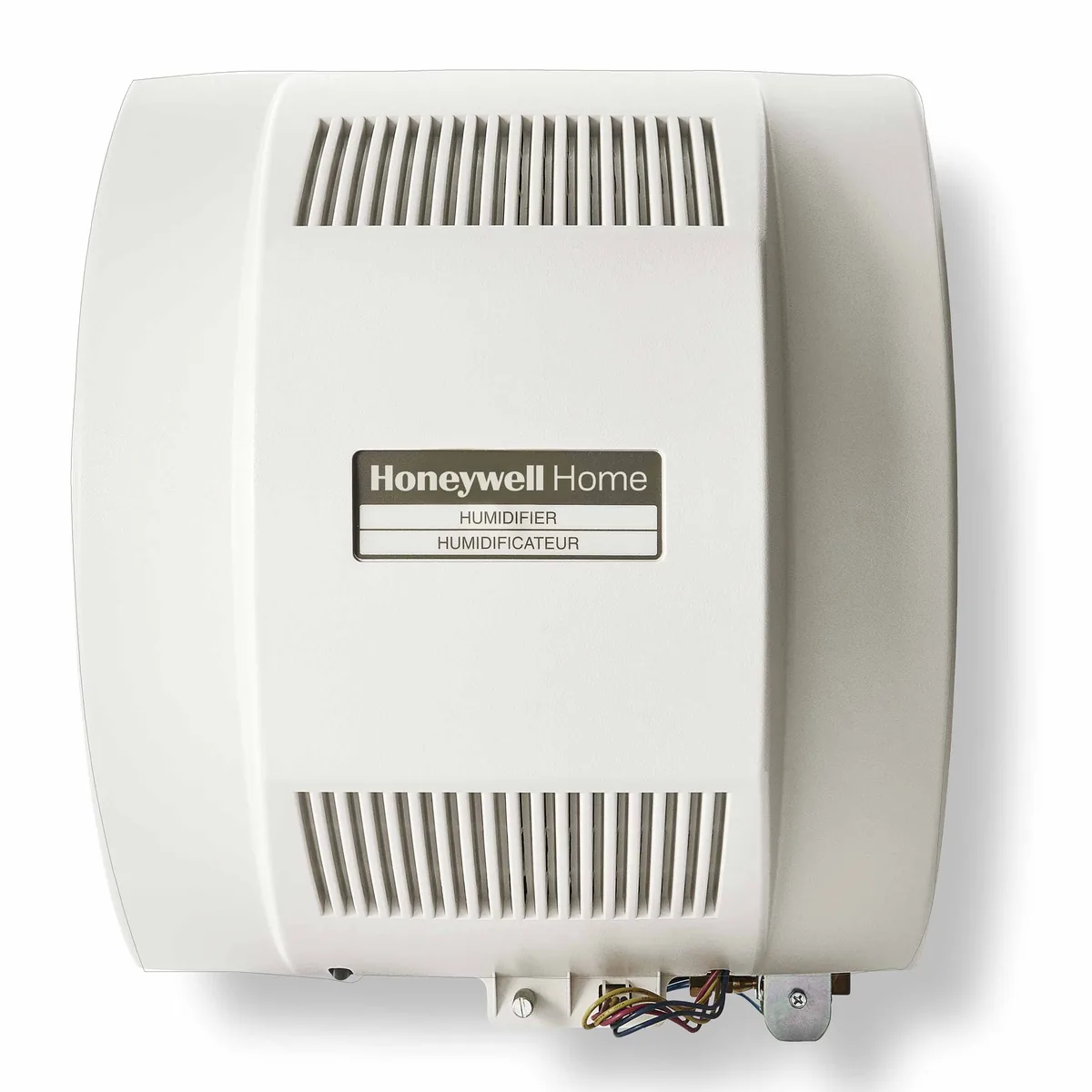
In short: The Honeywell HEV620 Top Fill Tower costs $100 less; the Honeywell HE360 Fan-Powered genuinely holds a larger room (4,434 sq ft against 493 sq ft); they are different mechanisms entirely — evaporative against whole-house; the Honeywell HEV620 Top Fill Tower costs about $16 less a year in wicks and watts.
| Spec | Honeywell HEV620 Top Fill Tower | Honeywell HE360 Fan-Powered |
|---|---|---|
| Approx. price | ~$130 | ~$230 |
| Type | Evaporative | Whole-house |
| Mist | cool | cool |
| Rated output | 2 gal/day | 18 gal/day |
| Output standard | Maker's published output rate | Maker's published output rate |
| Honest room size | 493 sq ft | 4,434 sq ft |
| Claimed coverage | 300 sq ft | 4,500 sq ft |
| Claim vs physics | 0.61× | 1.01× |
| Tank size | 1.7 gal | Plumbed |
| Runtime at the claimed room | 34 hr | — |
| Real runtime at full output | 20 hr | — |
| Yearly running cost | ~$46 | ~$62 |
| Replaceable media | Wick, replaced through the season | Filter, replaced through the season |
| White dust risk | No | No |
| Humidistat | Yes | Yes |
| Noise on low | — | — |
| Top fill | Yes | No |
| Dishwasher-safe tank | No | No |
| App control | No | No |
| Power | 40 W | 130 W |
Highlighted cells are the better number in that row, and only where a direction is unambiguous — more output and more supported room, less noise, cost and price. Honest room size and runtime are computed from each maker’s own published figures; here is the calculation.
Pros and cons
Honeywell HEV620 Top Fill Tower
- The one number on the box that undersells the machine - the output supports roughly 60% more room than Honeywell claims
- A real digital humidistat, so it stops when the room is where you asked for it
- Top filling solves the HCM-350's most-cited annoyance
- Tower footprint takes very little floor area for a 1.7-gallon tank
- Wick filters at about $17 every one to three months add up faster than the sticker suggests
- The tall narrow tank is hard to get a hand into for cleaning
- Owners report the humidistat reading a few points off a separate hygrometer
- Fan noise at the top setting is noticeable in a quiet bedroom
Honeywell HE360 Fan-Powered
- Its stated coverage and its output agree to within a couple of percent - the most accurate whole-house claim here
- Runs when the furnace does not, which is the whole reason to pay more than a bypass unit
- $60 cheaper than the equivalent Aprilaire 700 at the same capacity
- Specifically engineered for the modern furnaces that cycle least
- 130W of its own blower, where a bypass unit costs about 20W of the furnace's
- The onboard blower is audible near the furnace
- Same install cost and same forced-air requirement as every unit in this class
- Honeywell pads are a different part family from Aprilaire's, so a contractor may stock only one