Aprilaire
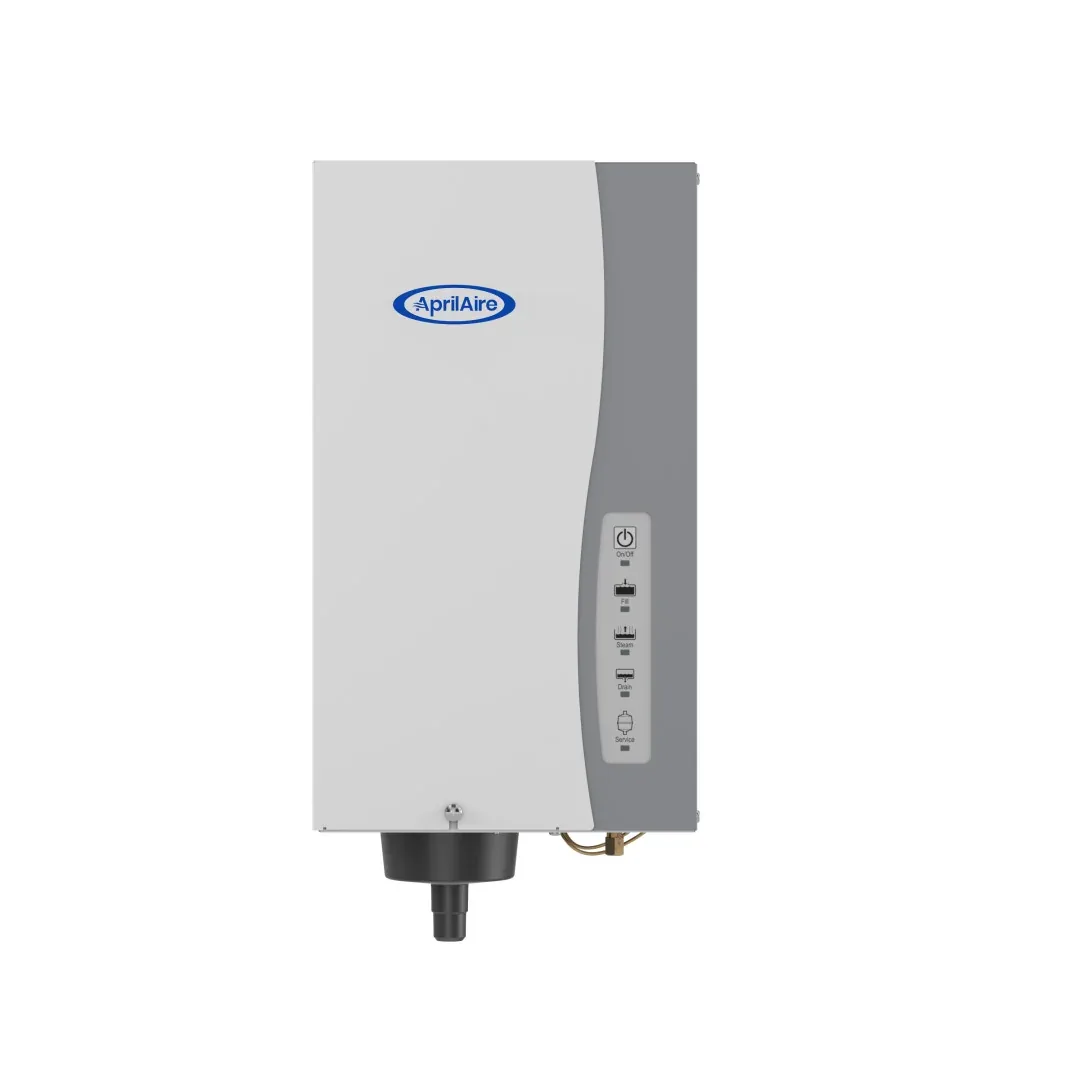
Aprilaire 800 Steam
Nearly 35 gallons a day, which is twice the biggest evaporative here and three times any portable. A steam humidifier boils water with electrodes and injects the steam into the ductwork, so unlike every evaporative unit it does not care whether the supply air is warm - it makes its own heat. That is what lets it serve a 10,000 sq ft house, and it is also why it needs a dedicated 240V circuit and why installation runs $1,800 to $4,200. There is no water panel to buy, which is the one running cost it removes; the 11.5 kW it draws while steaming is the one it adds.
The room-size claim, reconciled
8,524 sq ft supported · box says 10,300 sq ft
The box says 10,300 sq ft; the winter load calculation puts the output at 8,524 sq ft — an overstatement of about 21%, which is modest for this category.
What a year costs
no water panel; the electrodes are cleaned rather than replaced on a schedule. Electricity assumes the rated 11500 W for 12 hours a day across a 150-day heating season at 16¢ per kilowatt-hour.
Specifications
Maintenance profile
- Top fill
- No — tank comes off and goes to the sink
- Replaceable media
- None — nothing to buy
Facts, not a score. Which of these matter depends entirely on whether the unit ends up somewhere you will actually clean it.
Features
- 34.6 gal/day - the highest capacity in the catalog
- Steam: independent of supply-air temperature, works with any heating type
- No water panel or wick to replace
- Automatic digital humidistat
- Canister-free electrode design
- 5-year warranty
Pros
- The only unit here that works with a boiler, baseboards or a heat pump, because it makes its own heat rather than borrowing the furnace's
- Nearly twice the capacity of the largest evaporative whole-house unit
- No consumable pads or panels at all
- Reaches a humidity target far faster than any evaporative, which matters after a cold snap
Cons
- 11.5 kW while steaming - by far the most expensive unit here to run, and it needs a dedicated 240V circuit
- Installation of $1,800 to $4,200 on top of $1,100 of hardware, because of the electrical work
- Electrodes scale in hard water and need periodic cleaning, which is a service call for most owners
- Over-humidification risk is highest with a unit this powerful in a cold climate
- The 10,300 sq ft figure is far beyond most houses; for a normal home this is more capacity than the envelope can use
What owners say
Summarised from owner discussions and long-form owner reviews. Nobody here has used this unit.
The unit people research when they have moved somewhere genuinely cold and want the humidity problem solved before the first winter. Steam is the only whole-house mechanism that does not depend on warm supply air, so it works with a boiler, baseboards or a heat pump where every evaporative unit is useless.
What owners weigh against that is cost and consequence. The electrical work for a dedicated 240V circuit is why installation quotes run to several thousand, and the running cost while steaming is the highest of anything in this catalog. Electrodes scale on hard water and cleaning them is not a homeowner job for most people.
The risk worth naming is over-humidification. This is the only class of humidifier with enough capacity to put moisture into wall cavities faster than a cold building can cope with, and the control caps that owners sometimes try to defeat are there for that reason.
What owners like
- The only unit here that works without forced-air heat, because it makes its own heat rather than borrowing the furnace's
- Nearly twice the capacity of the largest evaporative whole-house unit, which is what people moving to very cold climates go looking for
- No water panels or pads to replace at all
- Reaches a target far faster than any evaporative, which matters after a cold snap
Common complaints
- It draws kilowatts while steaming and needs a dedicated 240V circuit, which is why the installation runs several times the hardware cost
- Electrodes scale in hard water and need periodic cleaning, which for most owners means a service call
- It has enough capacity to over-humidify a house in a cold climate, which is a structural risk the smaller units do not carry
- For a normal home it is more capacity than the building envelope can use
Questions owners ask
Do I need steam rather than evaporative?
Why is the installation so expensive?
Can it over-humidify a house?
Aprilaire 800 Steam, head to head
Looked at alongside it
More from Aprilaire →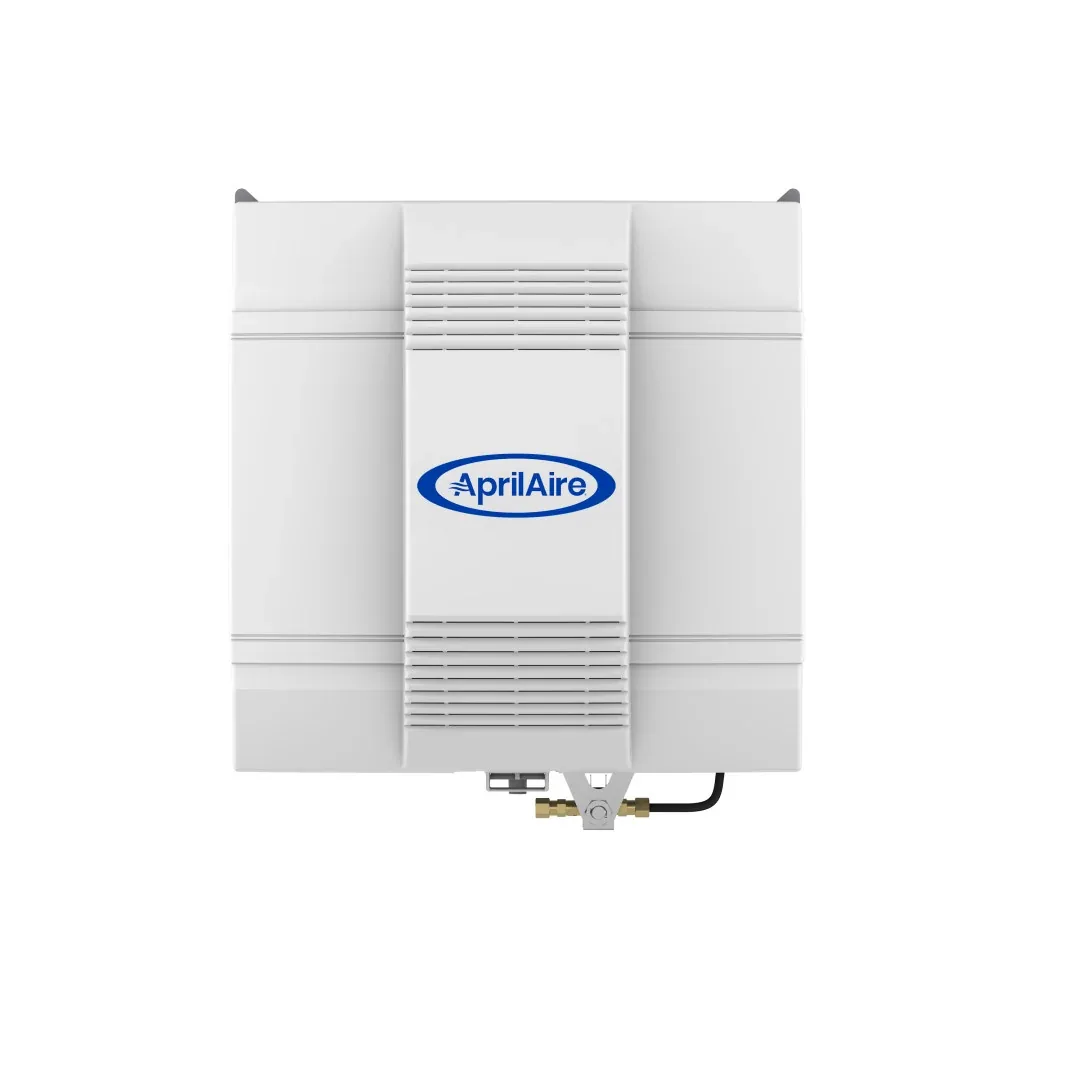
Aprilaire
Aprilaire 700 Fan-Powered
The fix for the bypass units' one real flaw. A fan-powered humidifier has its own blower, so it can run independently of the furnace - on a mild day when the heat barely cycles, this one still humidifies and a 500 or 600 does not. It also needs no bypass duct, which makes it the easier install where the furnace is tight against a wall. Eighteen gallons a day, 5,300 sq ft claimed for a tight home, and around 3,000 for an average one by Aprilaire's own guidance. The load calculation lands at about 4,400.
4,434 sq ft supported · box says 5,300 sq ft
Aprilaire
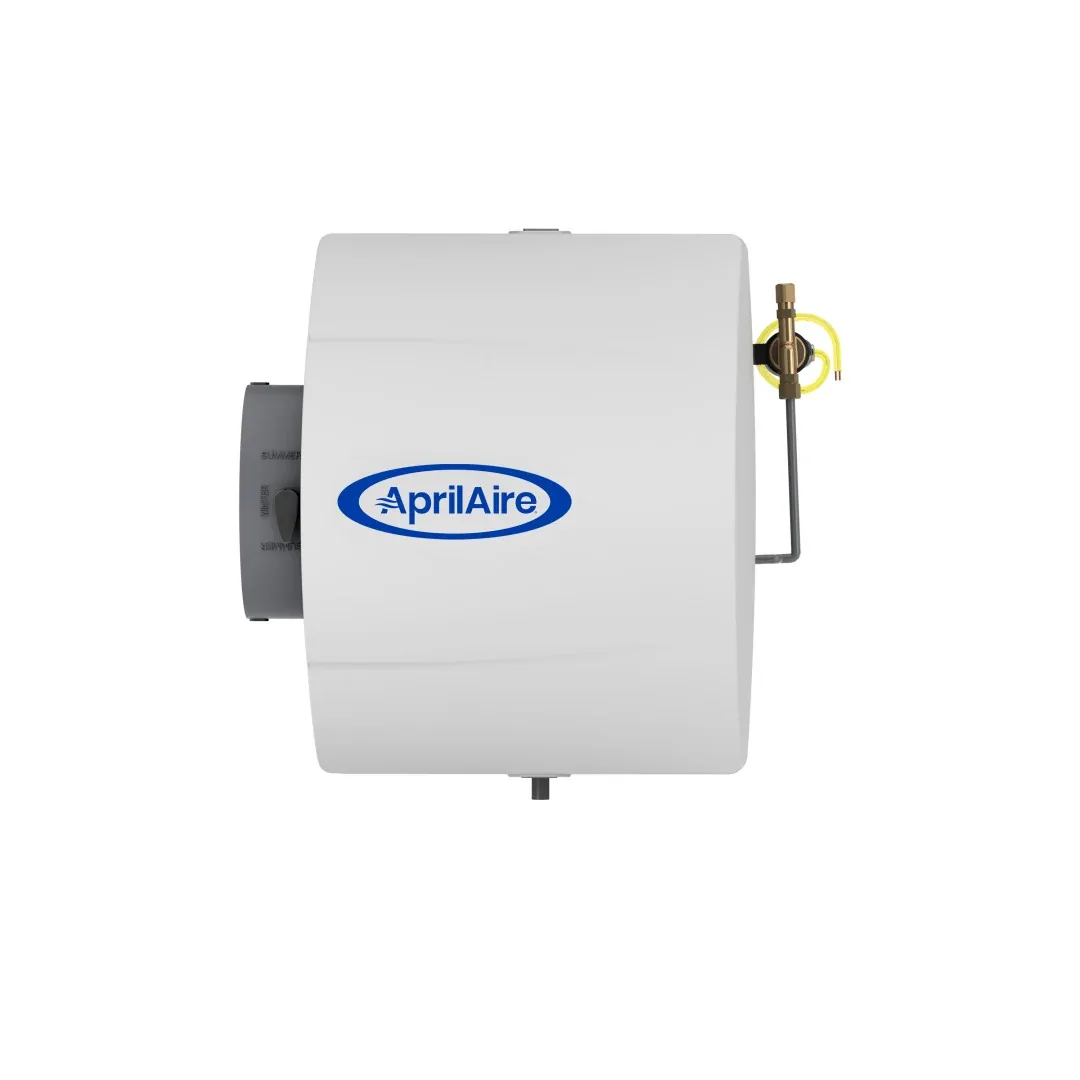
Aprilaire 600 Bypass
The best-selling whole-house humidifier in North America, and the default recommendation from most HVAC contractors for a reason: seventeen gallons a day for $220 of hardware and $25 a year of water panels. The published 5,000 sq ft is the tight-construction figure, and Aprilaire says plainly that an average home of about 2,000 to 2,500 sq ft is the realistic target - a maker volunteering that its headline number applies to a minority of houses. The load calculation puts 17 gal/day at around 4,200 sq ft, neatly between Aprilaire's own two figures.
4,188 sq ft supported · box says 5,000 sq ft
Aprilaire
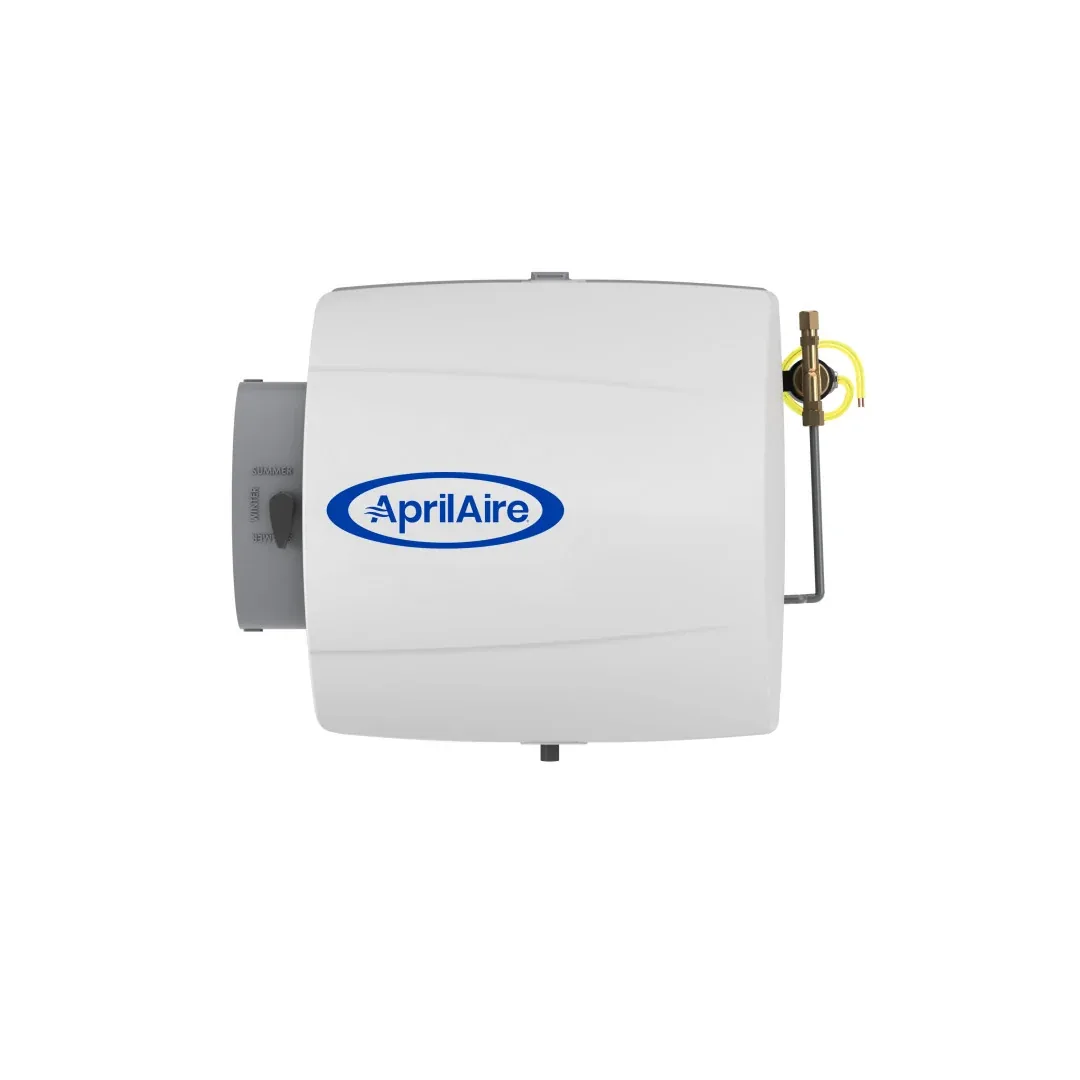
Aprilaire 500 Bypass
Bolted to the ductwork, plumbed to a water line, and never filled by hand again - that is the entire argument for going whole-house, and the Aprilaire 500 is the small end of it. A bypass humidifier borrows warm air from the supply duct, passes it through a wet evaporator panel, and returns it to the return duct; it only humidifies while the furnace is running, which is its main limitation. Twelve gallons a day matches the biggest portable console in this catalog, and the 3,600 sq ft claim sits about a fifth above what the load calculation supports. Aprilaire publishes separate figures for tight, average and loose construction, which is a more honest way to state coverage than anyone selling a plug-in unit manages.
2,956 sq ft supported · box says 3,600 sq ft